Nov 2021 – Feb 2022
Overview
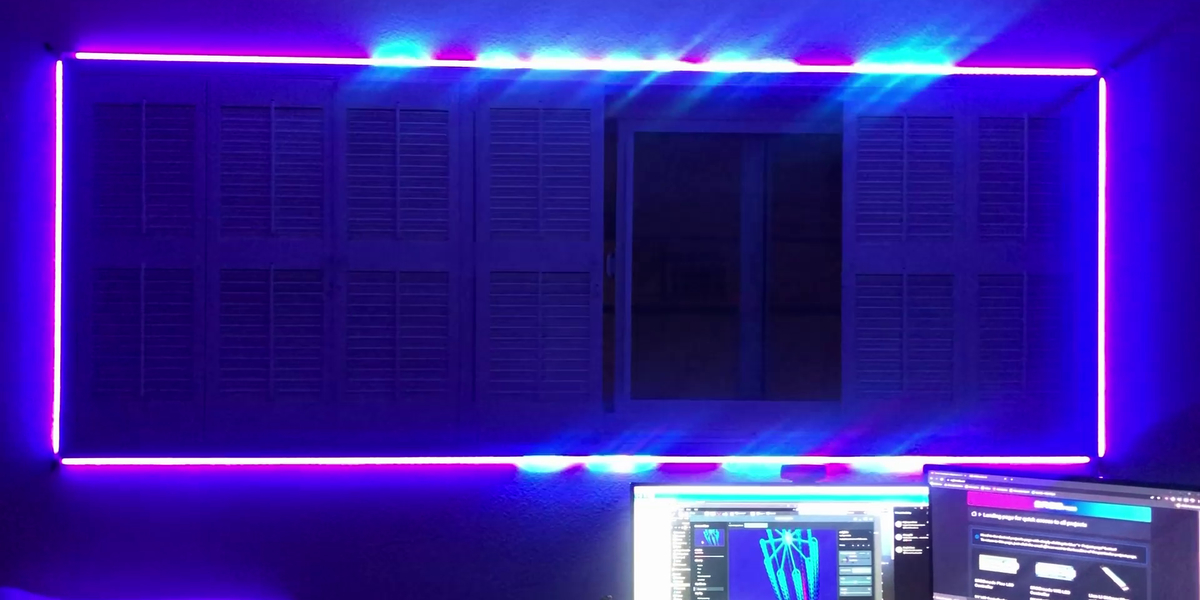
The Window was one of my first exhibit style devices. The goal was to create something better than the average homebrew lighting setup, with a large focus on visual control and light diffusion for a more visually appealing object.
The project used 90° diffusion channels for the LED strips to get maximum diffusion off the walls. The lights were easily visible during daytime, and at 20% brightness they were perfect at night. With some patterns, it was like having a digital fishtank the size of the wall.
Tech Breakdown
The software controlling it was SignalRGB with mods from SRGBmods to let my Raspberry Pi Pico interface with it. The LEDs had their own power supply. The wiring job was quite bad, but it worked and was hidden behind my computer.
Most of the patterns were made by other designers for SignalRGB. That was part of why I went this direction: the amount of support I would have out of the box from content creators was quite enticing. A variety of audio-reactive, spatially mapped patterns was something I knew I wouldn't be able to achieve myself for this experiment. I also wanted it to listen to music directly from my computer instead of a microphone, and the extra rendering power of not being stuck on a microcontroller made the desktop dependency an advantage.
Lessons
- A computer was required to connect to it, and control depended on a proprietary software interface I did not feel comfortable developing more for. This was a good experiment, but to expand past this was going to require making my own library.
- The device was not portable, and when I had to move unexpectedly a few months later, it was a sad project to say goodbye to.
- This is why many of my later projects have focused on portability and on having an ability to show people.
Tech Stack Raspberry Pi Pico WS2812B SRGBmods LED Diffusion Channels
Additional Keywords LED Wall Ambient Lighting Audio Reactive LEDs SignalRGB Custom Device LED Diffusion